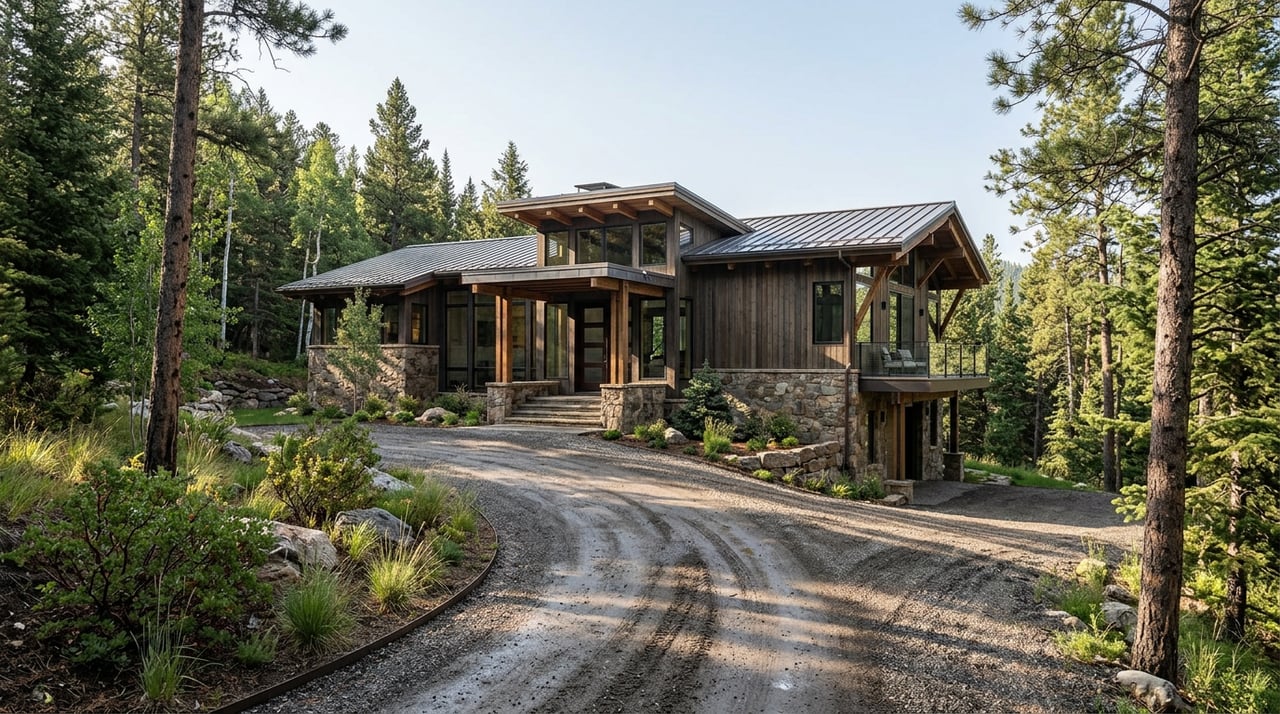
Two listings came up in the same week last spring, both along the South Platte corridor within a few miles of Lake George, both advertising river frontage, both close in acreage. One asked nearly double the other's price per acre. A buyer scrolling past both would have no way to know why, because the difference wasn't in the dirt. It was in a piece of paper neither listing mentioned by name: the water right.
In most of the country, owning land beside a river means you can use that river. Colorado doesn't work that way, and nowhere does that gap between assumption and law show up more plainly than along the stretch of the South Platte that runs past Lake George.
Two Deeds, Not One
Colorado adopted the doctrine of prior appropriation before it was even a state, and the rule has never softened: water rights are established by putting water to beneficial use, not by owning the ground next to it. The Colorado Division of Water Resources describes the system plainly. Whoever first diverted water from a stream and applied it to a beneficial use holds the senior claim on that water, and that claim exists independently of who owns the surrounding land. A water right can be sold, leased, or transferred to someone miles away who has never set foot on the parcel it originated from.
That means a deed for riverfront acreage near Lake George conveys the ground. It does not, on its own, convey a right to fish that water, irrigate from it, or stop your neighbor from drawing it down before it reaches your fence line. Those are separate legal instruments, adjudicated through Colorado's water courts and tracked by priority date. A right decreed in 1889 gets served before one decreed in 1975, regardless of whose front yard is closer to the bank.
For a buyer comparing land in Park County, this is the fact that reshapes everything else on the listing sheet.
What Three Stretches of the Same River Actually Sell
You don't have to look far from Lake George to see the doctrine play out in real transactions.
South of town, a private community called Sportsmen's Paradise controls roughly 1.5 miles of South Platte frontage along with six fishing ponds and a stocked lake. Access runs through two private gates, membership includes stocking the river three times a year, and the community works with the Coalition for the Upper South Platte on habitat protection and catch-and-release management. What a buyer purchases here isn't just riverfront ground. It's a controlled, maintained, club-administered fishery, and the price reflects the infrastructure and exclusivity as much as the linear footage of water.
Further downstream, a stretch known as Abell River Ranch covers about three miles of the South Platte between Eleven Mile Canyon and Cheesman Reservoir. The Abell family held that water for generations, and the ranch wasn't opened to outside guiding until 2019. Decades of restricted access turned an ordinary ranch holding into one of the more sought-after private beats on the river, again for reasons that have nothing to do with acreage and everything to do with who controls the water and how long they've kept it closed.
Compare either of those to a typical open parcel along Highway 24 with river frontage but no adjudicated recreational right, no club infrastructure, and no history of restricted access. The river runs past it the same way it runs past Sportsmen's Paradise. What's missing is everything that turns frontage into a usable, defensible asset.
Three parcels, three very different products, one river.
The Fence Across the River
There's a detail in the whitewater community's own trip notes for the Cheesman Canyon run that captures this better than any legal summary could. Paddlers running the stretch between Eleven Mile Reservoir and Cheesman Reservoir have to pass through the Sportsmen's Paradise property, and the club has strung fencing along and across the river to manage that passage. Club members escort boaters through to the public land beyond.
That's not a story about fishing. It's a story about what ownership of river frontage actually confers in Colorado: not just the right to use the water, but in some cases the standing to control who else passes through it. A deed that comes with an adjudicated right and a documented access structure is a fundamentally different asset than a deed that comes with a view of the water and nothing more. Buyers pricing land by the acre often miss that the fence, the gate, and the decree are the product, not the ground underneath them.
What the Per-Acre Number Hides
As of July 2026, roughly 125 properties were listed for sale in and around Lake George, with an average asking price near $616,085 and an average price per acre around $17,460 across the parcels on the market. That average is doing a lot of quiet work. It's blending bare, water-blind acreage with no history and no rights against parcels that carry documented, senior, or club-controlled water access. A number that wide only tells you the shape of the market, not which bucket any specific listing falls into.
This is worth sitting with if you're comparing Lake George to other parts of the Case Advantage service area. Land near water in this corridor tends to hold value differently than acreage further from the South Platte, simply because usable water is scarcer here than the raw acreage numbers suggest. But that premium attaches to documented rights and access, not to the word "riverfront" in a listing description.
What to Actually Verify Before You Write an Offer
None of this needs to be a mystery by the time you're under contract. A few concrete steps separate buyers who know what they're purchasing from buyers who find out later.
- Ask for the water right's decree number and priority date, then look it up yourself through the Colorado Division of Water Resources well and water rights search tools.
- Confirm whether the property has an existing well permit, and whether that permit is for household use only or includes irrigation, since Park County requires a permit from the Division of Water Resources before any well is drilled.
- If the property sits on septic, ask whether a transfer-of-title inspection has been scheduled. Park County's OWTS regulations require this evaluation before the sale closes.
- If the parcel sits within a private fishing community or ranch with restricted river access, get the membership or access agreement in writing and confirm whether it transfers with the deed or requires separate approval.
- Have a title company run a chain-of-title search specifically for any historical severance of mineral or water rights from the surface estate. Prior owners sometimes reserved rights that never transferred with later sales.
None of these steps are exotic. They're the difference between buying river frontage and buying the river.
A Few Questions Worth Asking Directly
Does owning land next to the South Platte automatically let me fish it? No. Fishing access depends on whether the adjacent stretch is publicly navigable, privately controlled by a club or ranch, or simply unposted. Ownership of the bank doesn't by itself grant a right to the water or the fishery in it.
If I drill a well for household use, do I need a separate water right? You need a well permit from the Colorado Division of Water Resources before drilling, and most household wells in this area are permitted for domestic use only. That permit is distinct from any surface water right tied to river frontage, and one does not substitute for the other.
What happens to my water right in a dry year? Prior appropriation means senior rights get served first. If you hold a junior right and a senior user upstream places a call on the river, your diversion can be curtailed until the call is satisfied, regardless of how much frontage you own.
If you're weighing land near the South Platte against acreage elsewhere in Teller or Park County, the questions above are the ones that actually determine what you're paying for. The Case Advantage works this corridor regularly and can walk you through a specific parcel's water history before you write an offer. Schedule a consultation and bring the listing sheet. We'll tell you what the river actually includes.